

The 14th L3 Leadership Symposium focuses on ‘Unmasking the Leader Within: Overcoming Imposter Syndrome in Leadership.’
by Duane Bonifer
COLUMBIA, KY. (03/25/2026) Lindsey Wilson University student Atavya Fowler ’26 has experienced the imposter syndrome on numerous occasions, most recently when she was invited to speak about the subject on campus.
Fowler and eight other members of the Lindsey Wilson community addressed the psychological experience at the 14th edition of the Lindsey Wilson L3 Leadership Symposium, held Tuesday, March 24, in W.W. Slider Humanities Center Recital Hall.
Sponsored by the university’s Center for Civic Engagement and Student Leadership, the daylong symposium featured three trios of speakers who explored “Unmasking the Leader Within: Overcoming Imposter Syndrome in Leadership.”
‘That quiet voice’
A term coined in the late-1970s by psychologists Pauline Clance and Suzanne Imes, imposter syndrome refers to high-achieving individuals who, despite success, question their achievements and fear being exposed as frauds.
“That quiet voice that tells you that you’re not good enough,” said Fowler, an art major from Nassau, Bahamas.
Or as Jay Woodall ’27 of Science Hill, Kentucky, said: “That voice in your head that is telling you that you’re not enough is not true — it’s fear.”
Fowler said that one reason leaders fear being exposed as imposters is because humility is a trait shared by many leaders. Consequently, they often experience fear whenever they are “stepping into something big.”
A way to combat the feeling of fear of making a mistake with “something big” is to have the confidence to push ahead and take responsibility.
“Leadereship isn’t about perfection, it’s about responsibility,” said Fowler.
The symposium’s speakers said that while being thrust into an uncomfortable situation can be intimidating, the less time they think about their situation, the less likely they are to feel like an imposter. Theatre graduate assistant Kassidy Phelps ’24 recalled a time when she had to take over a production that was close to opening night. She said it was a tall order, but she succeeded, in part, because she didn’t think too much about the odds she faced.
“If I had time to think for a moment that I could not do it or that I should not be the one to do it, I could not have done it,” said Phelps. “Overcoming imposter syndrome is a daily task. It is a choice to understand that you deserve to be where you are or you wouldn’t be there.”
The show must go on
Sabrina Ruiz ’26 said she almost did not have the courage to audition for her first LWU play, which was the musical Godspell, because she thought she lacked the talent to appear on stage. Since she overcame that mental obstacle, she has appeared in 19 LWU theatre productions, including stepping in to play Desdemona in William Shakespeare’s Othello nine days before that production was set to open. She also battled a failing voice to play the lead character Jo March in the musical adaptation of Little Women.
“The show must go on, and you must find a way (to do it) even if you can’t see the end results,” said Ruiz, an arts administration and theatre double major from Louisville, Kentucky.
Ruiz said she came up with a simple solution whenever she faced imposter syndrome in theatre or when considering a position as a campus leader.
“Look imposter syndrome in the eye and say, ‘I don’t care what you say, I’m doing it anyway,'” she said.
English professor Kendall Sewell ’13 told how “trap doors, anchors and learning in an uncertain time” helped lead him from a doctoral program to a high school teaching position and then back to Lindsey Wilson as a college English professor.
“Anchors are important to look for in life,” said Sewell, who explained that teaching had been an anchor for him during trying times.
Director of Track & Field and Cross Country Anthony Thompson ’18 reminded people to look for successes in failures rather than affirmations of being an imposter.
“Sometimes it’s OK not to be perfect, because if you’re perfect, how are you going to learn?” he asked. “We can’t have a fear of messing up. We need to remember we are human.”
What defines a person
Director of Career Services Annissa Crewe-Brown ’23 said that knowing that you are defined by intangible qualities, not by work or titles, is also a strong antidote to imposter syndrome.
“Base your identity on who you are rather than on what you do,” she said.
Zachary Hite ’27 recalled feeling like an imposter when he was a Kentucky Governor’s Scholar in the summer between his junior and senior years of high school.
“I arrived at GSP, and I realized I wasn’t the smartest in the room anymore,” said Hite, an engineering mechanics major from Hodgenville, Kentucky, recalling other students’ conversations about test scores and classes not available at his high school.
But then Hite said he remembered something important.
“I was there for a reason, and I needed to realize that,” he said.
As old as Moses
As several speakers noted, imposter syndrome might be a term from late-20th century psychology, but the concept is as old as the Bible.
In opening the symposium, university Chaplain the Rev. Tyler Brumfield reminded the audience that Moses often retreated into imposter syndrome, needing divine intervention to be shaken out of it.
“The thing we find in the Bible is that time and time again, God calls ordinary people to do extraordinary things,” he said.
Bookending the symposium with her talk, Fowler also reminded the audience that one of the greatest prophets in the Old Testament could also be a modern-day patron saint for the imposter syndrome.
“You’re not placed there by accident,” she said. “You’re placed there for a reason.”
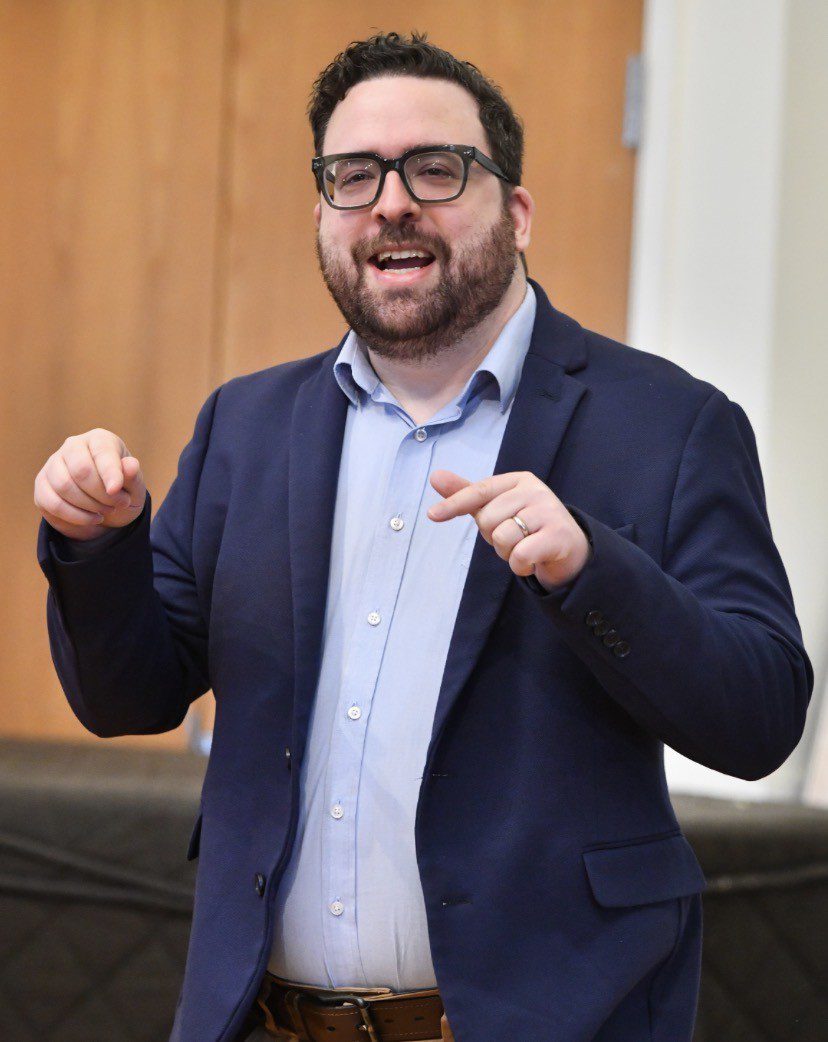
Lindsey Wilson University Chaplain the Rev. Tyler Brumfield delivers the opening talk at the 14th Lindsey Wilson L3 Leadership Symposium, held Tuesday, March 24, in W.W. Slider Humanities Center Recital Hall.
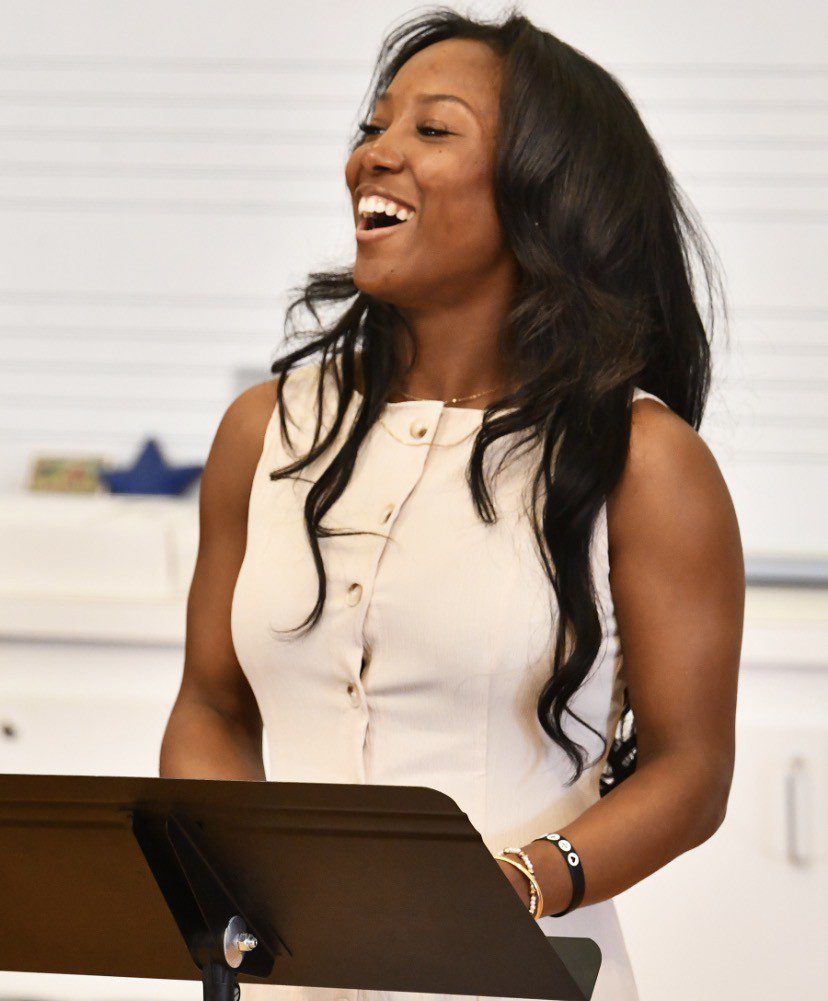
Lindsey Wilson University student Atavya Fowler ’26 discusses her struggles with imposter syndrome at the 14th Lindsey Wilson L3 Leadership Symposium, held Tuesday, March 24, in W.W. Slider Humanities Center Recital Hall.
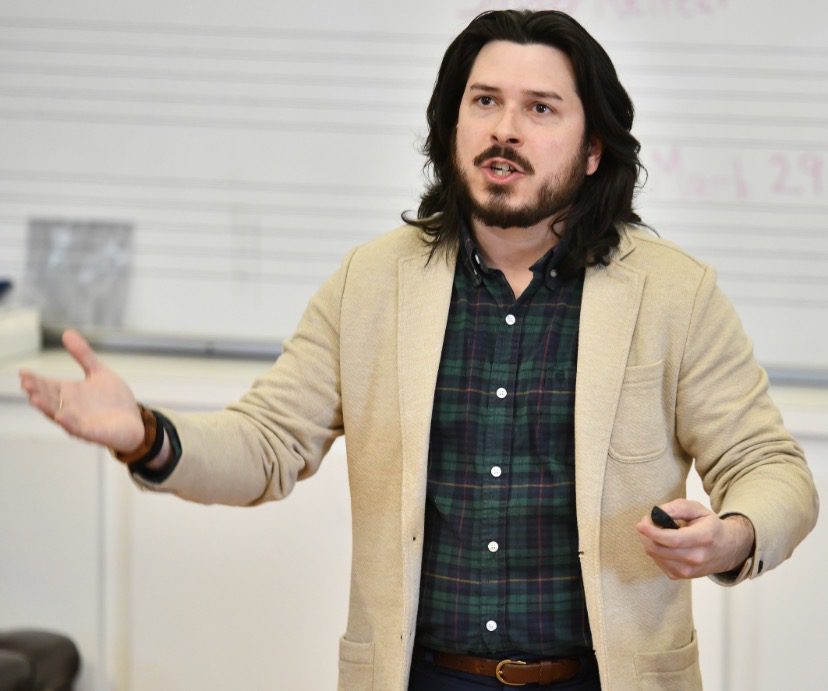
Lindsey Wilson University English professor Kendall Sewell ’13 talks about “trap doors, anchors and learning in an uncertain time” at the 14th Lindsey Wilson L3 Leadership Symposium, held Tuesday, March 24, in W.W. Slider Humanities Center Recital Hall.
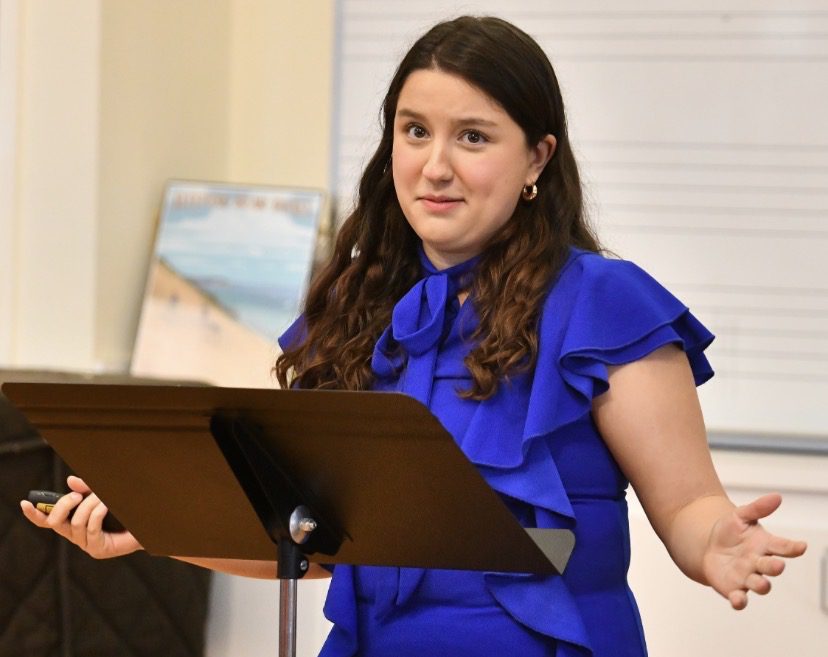
Lindsey Wilson University student Sabrina Ruiz ’26 of Louisville, Kentucky, said imposter syndrome almost prevented her from auditioning for a Lindsey Wilson theatre production at the 14th Lindsey Wilson L3 Leadership Symposium, held Tuesday, March 24, in W.W. Slider Humanities Center Recital Hall.

Lindsey Wilson University Director of Track & Field and Cross Country Anthony Thompson ’18 reminded people to look for successes in failures rather than affirmations of being an imposter at the 14th Lindsey Wilson L3 Leadership Symposium, held Tuesday, March 24, in W.W. Slider Humanities Center Recital Hall.
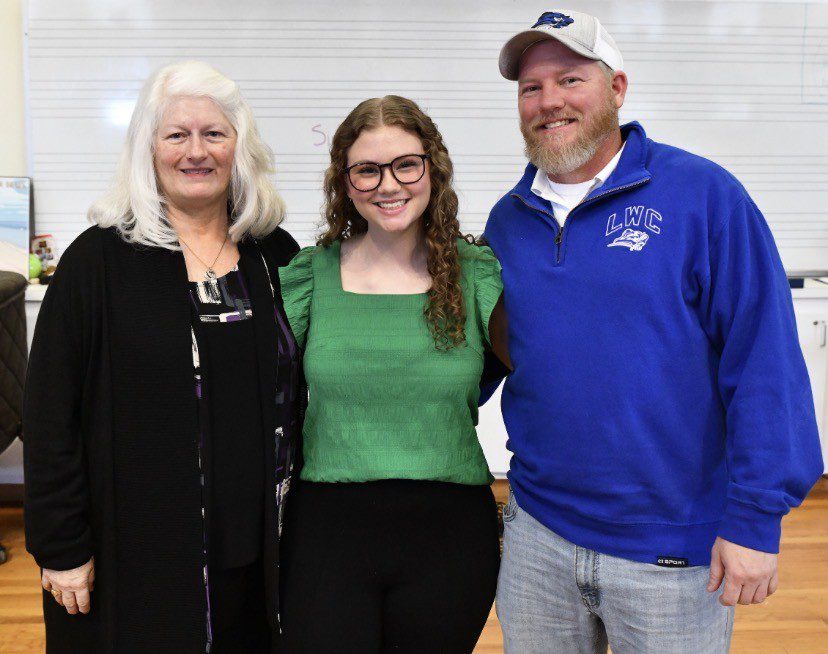
Lindsey Wilson University student Jay Woodall ’27 is congratulated by her grandmother Lorene Post and father, Matt Woodall, both of Somerset, Kentucky, after speaking about imposter syndrome at the 14th Lindsey Wilson L3 Leadership Symposium, held Tuesday, March 24, in W.W. Slider Humanities Center Recital Hall.
Lindsey Wilson University is a vibrant liberal arts university in Columbia, Kentucky. Founded in 1903 and affiliated with The United Methodist Church, the mission of Lindsey Wilson is to serve the educational needs of students by providing a living-learning environment within an atmosphere of active caring and Christian concern where every student, every day, learns and grows and feels like a real human being. Lindsey Wilson offers 30 undergraduate majors, five graduate programs and a doctoral program. The university’s 29 intercollegiate varsity athletic teams have won more than 120 team and individual national championships.
View Online: http://lindseywilson.meritpages.com/news/lindsey-wilson-university-speakers-separate-leaders-from-imposters/58395
(Duane Bonifer – Lindsey Wilson University)