


Columbia Police Department – Substance Abuse Education (vaping among youth)
Vaping continues to increase in popularity, particularly among adolescents and young adults, even as traditional cigarette smoking declines. Public health officials warn that this trend presents significant health risks, especially due to the widespread availability of flavored nicotine products and the growing use of vaping devices for recreational drug consumption.
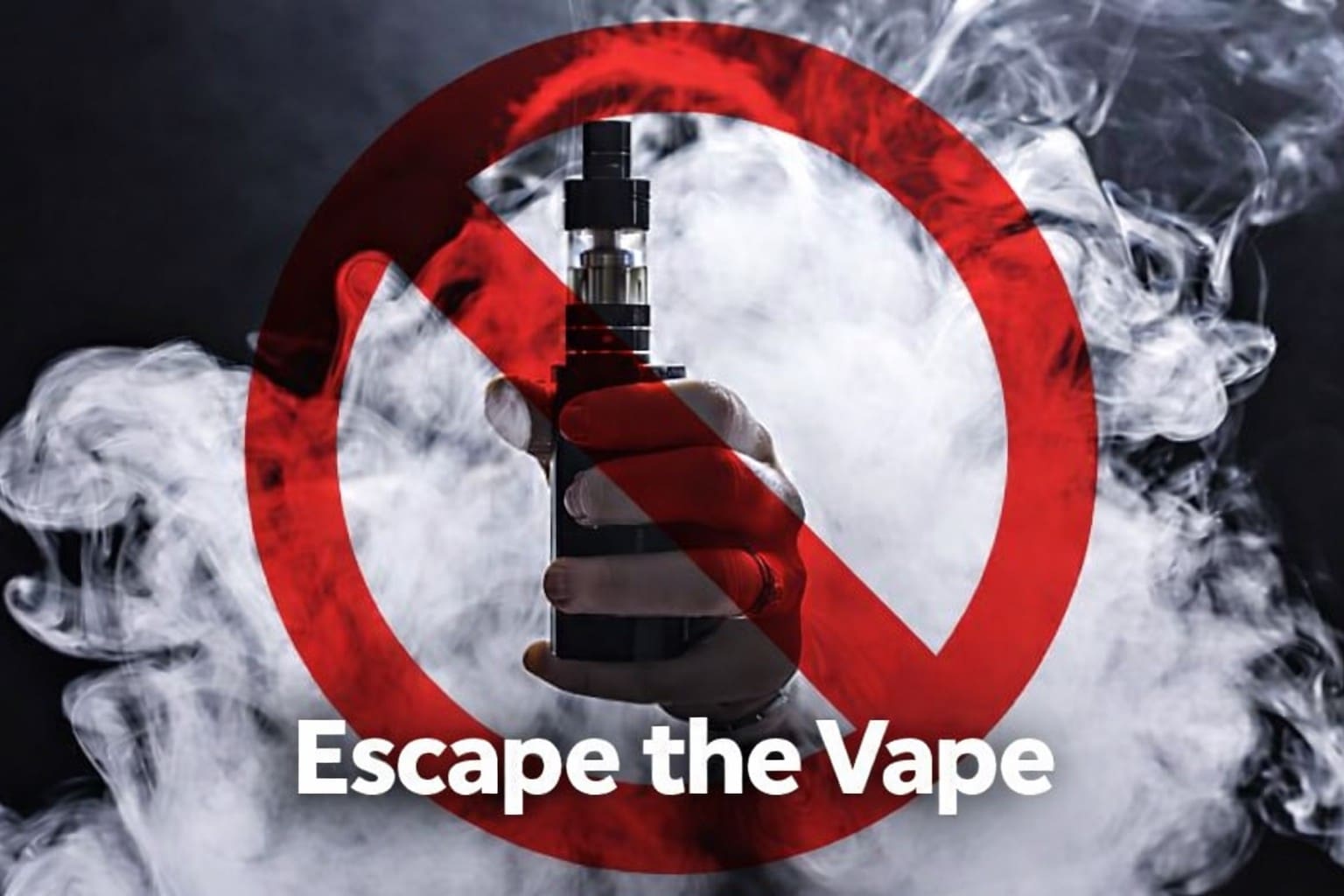
Vaping refers to inhaling an aerosol produced by electronic nicotine delivery systems (ENDS), including e-cigarettes and vape pens. These devices heat a liquid — commonly called e-liquid or vape juice — that may contain nicotine, flavoring chemicals, and other substances. It can contain multiple toxic compounds.
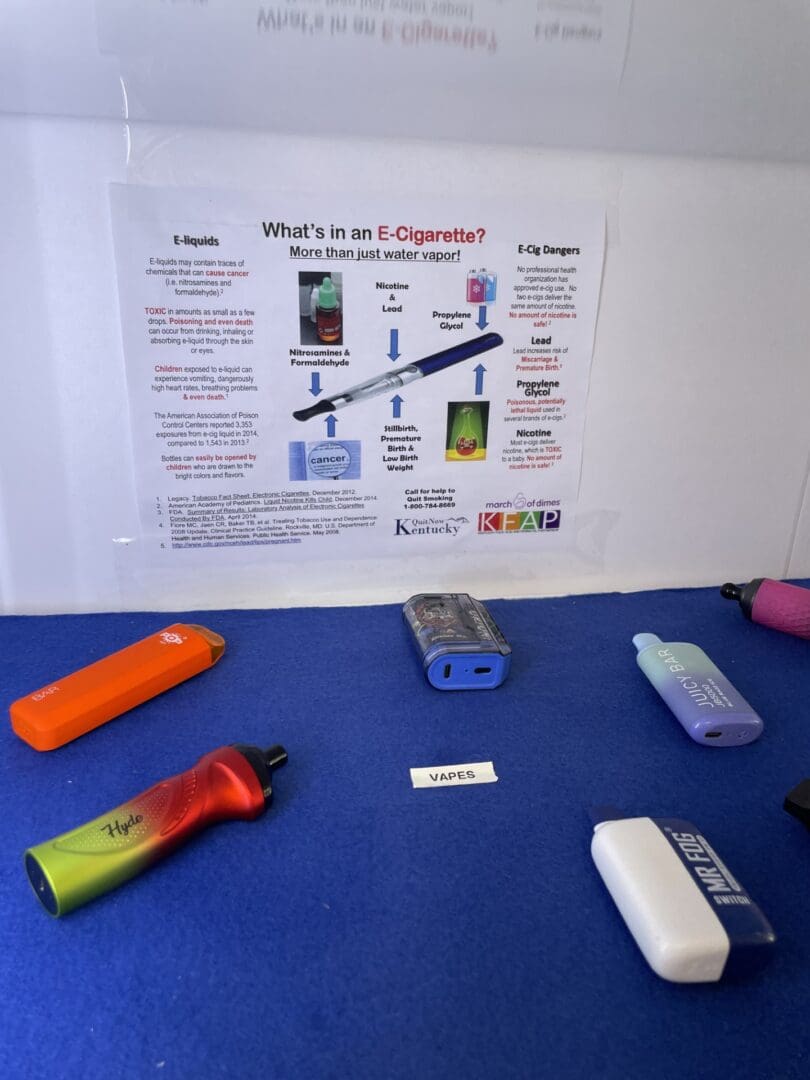
Harmful Substances in Vaping Liquids
E-liquids and aerosol vapes and/or e-cigarettes may contain:
•Nicotine, a highly addictive substance that can interfere with adolescent brain development
•Ultrafine particles that penetrate deep into lung tissue
•Flavoring chemicals, such as diacetyl, which has been linked to serious lung disease
•Volatile organic compounds
•Cancer-causing chemicals
•Heavy metals, including nickel, tin, and lead that can leach from heating coils
When heated, common base ingredients like propylene glycol and vegetable glycerin can break down into additional toxic byproducts, including formaldehyde and acrolein.
Risk of Nicotine Poisoning
Liquid nicotine used in vaping devices is highly concentrated. Accidental exposure — particularly among young children — can lead to nicotine poisoning.
Symptoms may include:
• Vomiting
• Difficulty breathing
• Headache
• Fainting
• Seizures
• Rapid or irregular heartbeat
In severe cases, nicotine poisoning can be fatal. Health experts urge parents and caregivers to store vaping products securely and out of reach of children.
Vaping and Recreational Drug Use
Vaping devices can also be used to inhale substances beyond nicotine, including THC and other illicit drugs. Because vaping produces minimal odor and no visible smoke, devices can be used discreetly, increasing the risk of concealed substance use. Illicit or unregulated vape liquids may contain dangerous additives or contaminants.
Youth Appeal and Addiction Risk
Flavored vaping products — including fruit, candy, and dessert varieties — remain especially appealing to younger users. Research indicates that early exposure to nicotine increases the likelihood of long-term addiction and may impact cognitive development.
Public Health Response
Health officials emphasize that while vaping may expose users to fewer combustion-related toxins than traditional cigarettes, it is not without significant risk. Preventative education, regulatory oversight, and parental awareness are critical in addressing the rise in youth vaping.
The Columbia Police Department is actively working to educate the community about the dangers of vaping and substance abuse.
For more information about vaping risks and prevention strategies:
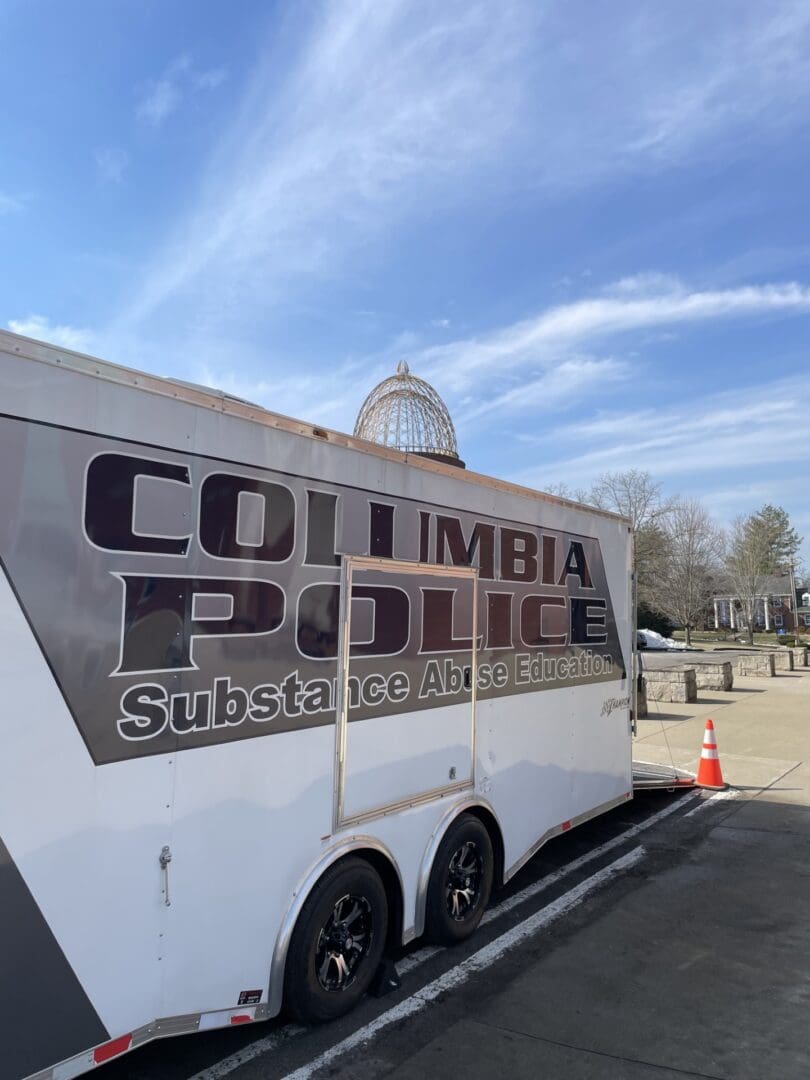
•The Columbia Police Department utilizes its Substance Abuse Education Trailer throughout the community to provide hands-on learning and awareness.
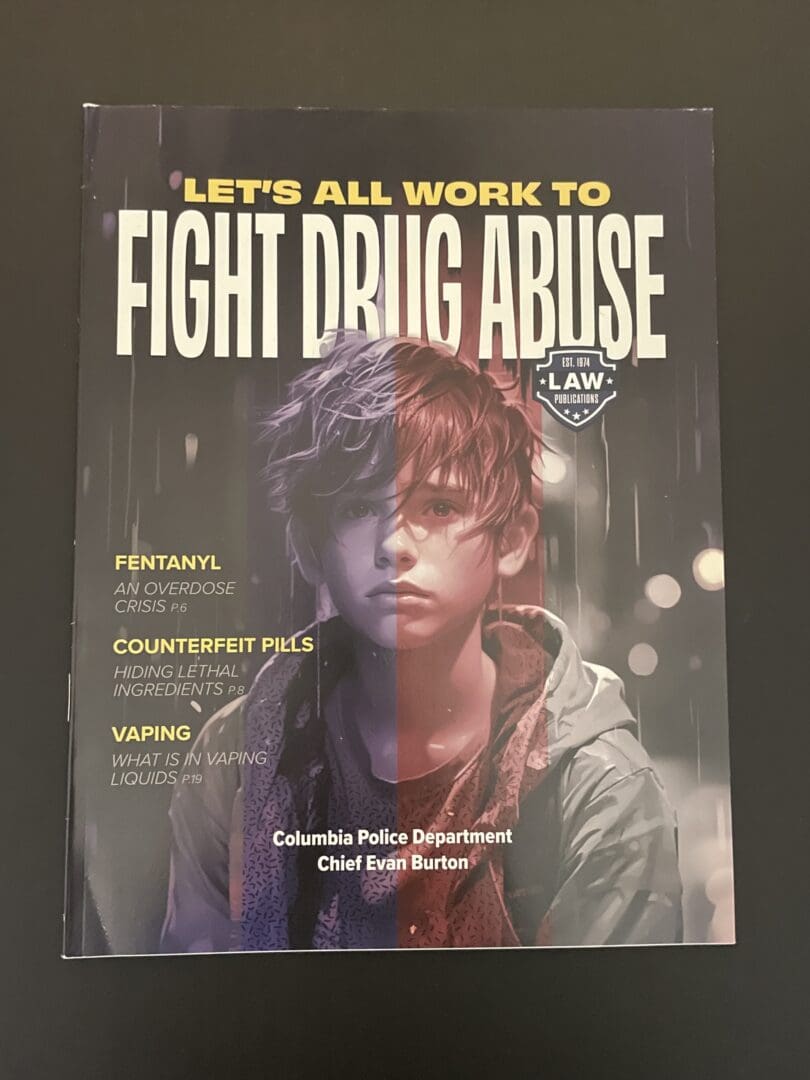
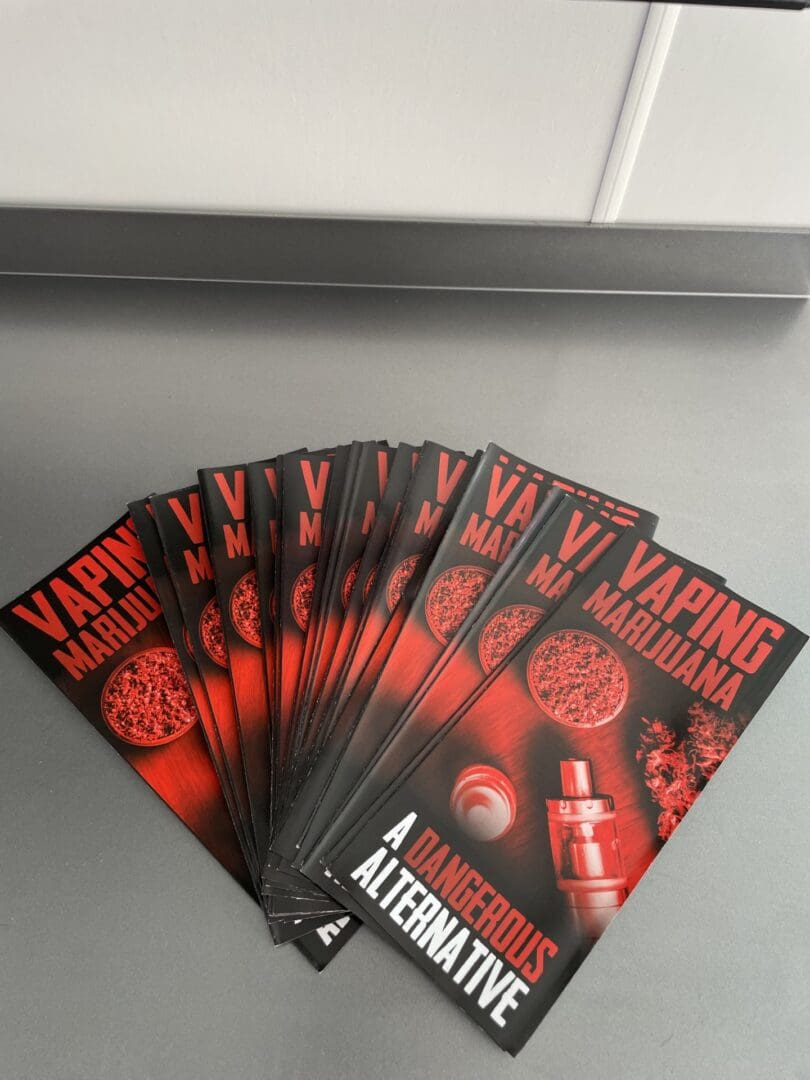
•Educational materials, including the magazine “Let’s All Work to Fight Drug Abuse,” are available for pickup at the Columbia Police Department.
Reporting Illegal Activity
If you suspect an adult buying or selling vaping products to underage children, please contact the Columbia Police Department Drug Tip-Line:
(270) 378-2259 (Cally’s Line)
All phone calls and/or text messages will remain anonymous.
Community cooperation is essential in preventing youth substance abuse. Together, we can promote informed decision-making, protect our children, and support a healthier future.

(Kila Kean, Secretary – Columbia Police Department)